- GST NO. : 27AAUFN6304L1ZP
sales@natuagroudyog.in

| Business Type | Exporter, Supplier, Trader |
| Purity | 100% |
| Technics | Handmade |
| Color | Brown |
| Click to view more | |
Product Details
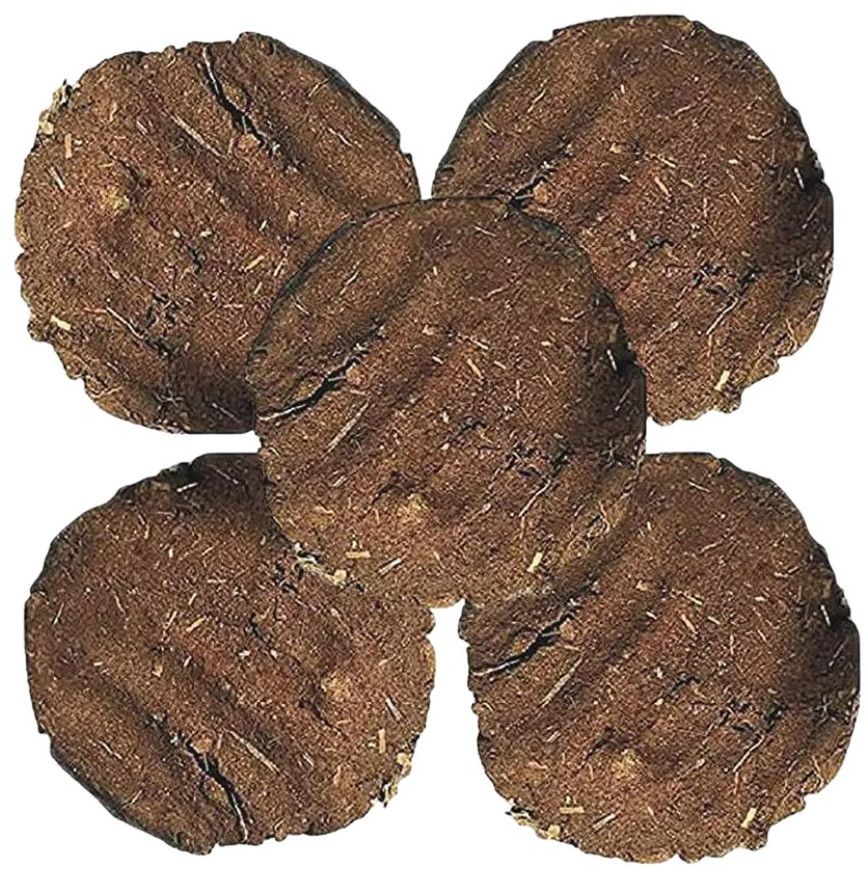
Cow Dung Cakes: Dual Role as Fertilizer and Alternative Biofuel
Cow dung cake, essentially dried and compressed bovine dung, is a product deeply embedded in traditional rural economies. It is valued not only for its composition but also for the powerful resource it becomes after use. This simple, natural input plays a vital dual role in sustainability: enriching the soil and providing a widely accessible source of renewable energy.
1. The Power of Ash: Soil Enrichment
While vermicompost and manure are used directly to amend the soil, the primary agricultural value of the cow dung cake lies in its residue: ash.
-
Potash Source: Cow dung ash is extremely rich in Potassium (Potash), along with other essential trace minerals. Potassium is a critical macronutrient required for plant health, improving stress resistance, regulating water flow, and enhancing the quality and flavor of fruits and vegetables.
-
Natural Amendment: The ash can be spread across fields or gardens, acting as a natural, alkaline soil additive that helps balance soil pH and provide highly bio-available minerals to plant roots.
-
Pest Control: Traditionally, the ash has also been used in gardens as a mild, physical deterrent for certain soft-bodied insect pests.
2. A Sustainable Alternative Fuel Source
The use of cow dung cakes as fuel represents one of the oldest forms of biomass energy and remains a cornerstone of clean, cost-effective energy for many communities.
-
Renewable Energy: Unlike fossil fuels, the dried dung is a renewable resource that is continuously generated. Utilizing this material as fuel is a highly efficient way of managing animal waste.
-
Near-Carbon Neutrality: When burned, the carbon dioxide released is largely balanced by the carbon dioxide that the original fodder (grass, crops) absorbed during its lifetime. This makes its use a near-carbon neutral practice, significantly better for atmospheric balance than burning coal or oil.
-
Steady, Long Burn: Cow dung cakes are known for their ability to provide a steady, slow, and long-lasting heat. This characteristic makes them highly desirable for traditional cooking methods that require sustained heat, such as simmering and slow-roasting, as well as for space heating.
-
Cost Efficiency: For many rural economies, cow dung fuel is a zero-cost input, drastically reducing household energy expenditures.
3. Environmental and Cultural Value
Beyond the farm and the hearth, the production of cow dung cakes contributes to environmental stewardship.
-
Waste Reduction: It serves as a natural and effective way to manage and utilize substantial amounts of animal waste, keeping it out of landfills or water sources.
-
Purification Use: The cakes have long been used in traditional practices for fumigation, where the slow-burning dung and associated smoke are believed to clear and purify the surrounding air.
Cow dung cake is a foundational product that elegantly links waste management, energy needs, and soil fertility, securing its place as a practical, multi-purpose input in sustainable living.